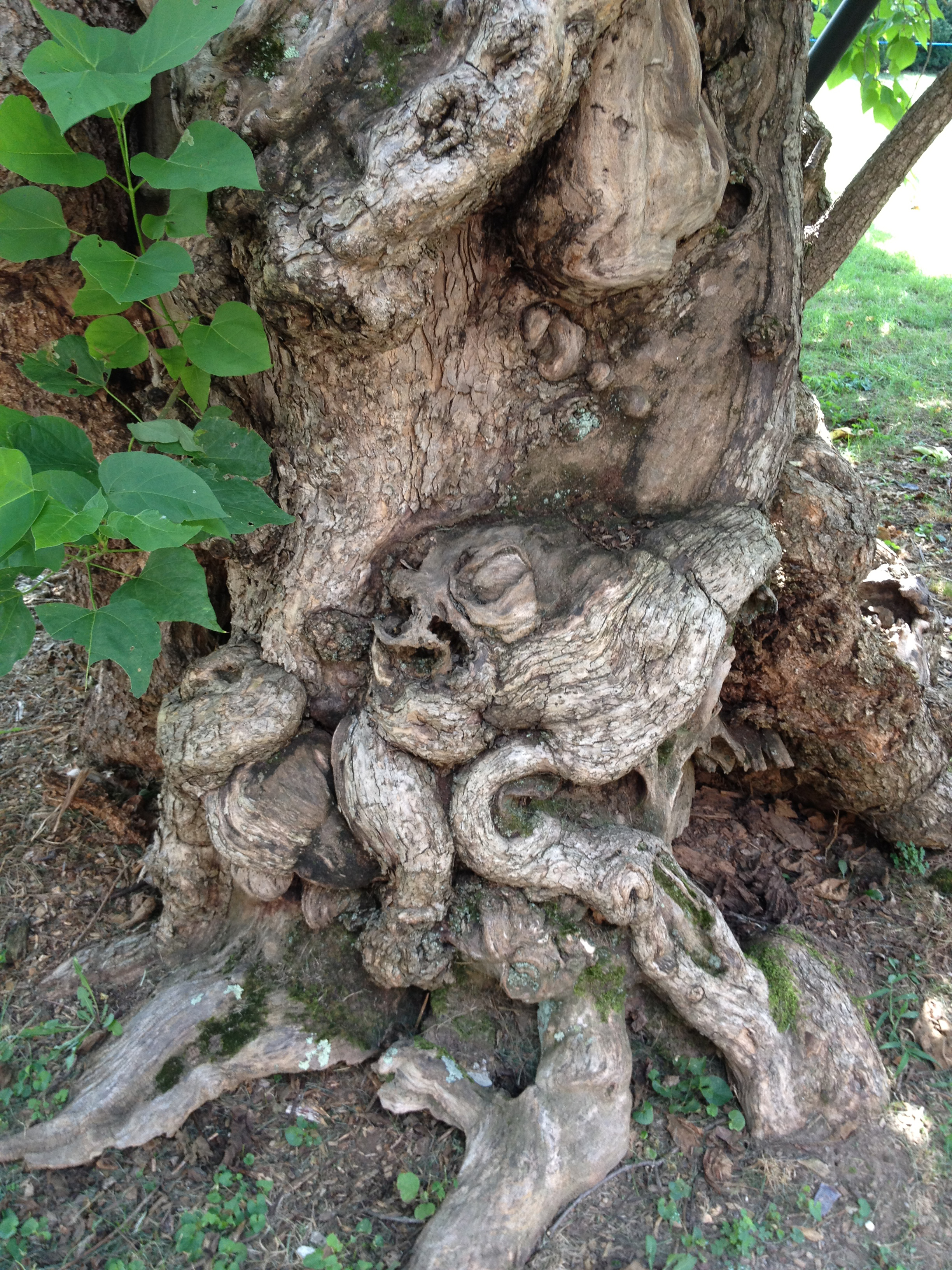
If the roots of Whitman’s witness tree were bathed in the anguish the poet beheld, no wonder its form holds such tortured beauty.
Walt Whitman opened his “Memoranda during the War” at the Chatham house, in Fredericksburg. The house had been occupied by the Union army and, like many houses and churches, converted into a hospital. Whitman’s mission to comfort the wounded and dying began here when his brother was wounded, December of 1862. His memoir opens with a sight all too familiar to soldiers and surgeons.
Began my visits in the Camp Hospitals in the Army of the Potomac. Spent a good part of the day in a large brick mansion, on the banks of the Rappahannock, used as a Hospital since the battle–Seems to have receiv’d only the worst cases. Out doors, at the foot of a tree, within ten yards of the front of the house, I notice a heap of amputated feet, legs, arms, hands, &c., a full load for a one-horse cart. Several dead bodies lie near, each cover’d with its brown woolen blanket….
Like old people, old trees can conceal dramatic memories under a rugged, stoic exterior. As Smithsonian Magazine says of trees that have survived battles and other historic events: “Witness trees have been known to hide bullets they’ve absorbed beneath new layers of wood and bark, and they heal other visible scars over time. While they may look like ordinary trees, they have incredible stories to tell.”
I wonder if Whitman could have guessed that the tree would recall the loving compassion of his visits to the wounded, and his compassion recall the tree, 150 years later, and both recall the “marrow of the tragedy” of the Civil War.
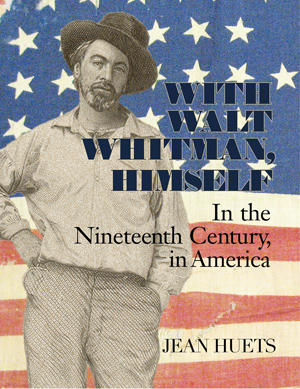
WITH WALT WHITMAN, HIMSELF: IN THE NINETEENTH CENTURY, IN AMERICA | by Jean Huets
“A true Whitmanian feast—for the intellect as well as for the eyes.” — Ed Folsom, editor Walt Whitman Quarterly
Amazon | B&N | bookshop.org (supports indie booksellers)
signed copies, free shipping order from Circling Rivers
Explore the fascinating roots of Whitman’s great work, Leaves of Grass: a family harrowed by alcoholism and mental illness; the bloody Civil War; burgeoning, brawling Manhattan and Brooklyn; literary allies and rivals; and his beloved America, racked by disunion even while racing westward. Over 300 period images immerse the reader in the life and times of Walt Whitman.
“A beautiful book of windows onto the life of Walt Whitman…. We find the man anew—standing in his time and looking straight at us. [Huets] has made a book of marvels and I can’t put it down.” — Steve Scafidi, Poet Laureate, Virginia
1862 – such sadness.
Yes, much grief. Whitman’s intro to Memoranda captures all sides of the War.
The caption says 2012 . . .
This sounds like an interesting read. . .
Doh! thanks for the catch, Becky!
Pingback:Fredericksburg miscellany | Leaves of Grass
Pingback:Fredericksburg & Walt Whitman | Leaves of Grass
Pingback:Two Fredericksburg Churches | JEAN HUETS